
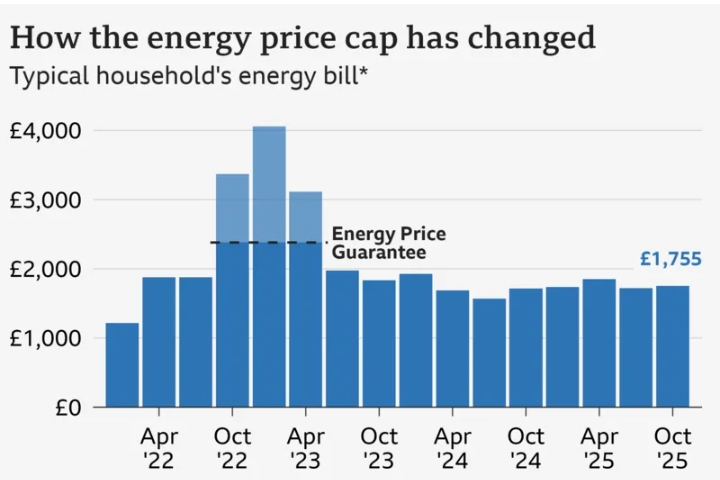
(Energy Bills ) This winter, millions of homes in England, Scotland, and Wales are preparing for increased gas and electricity costs. The price cap will rise by 2% in October 2025, according to confirmation from energy regulator Ofgem.
Even though this may seem like a slight increase, many families are already having difficulty keeping up with rising food prices, mortgage rates, and other expenses of daily living. Compared to the current cap, the average annual household bill for a typical energy user will increase by £35 to £1,755. This serves as yet another reminder to many people that the cost-of-living crisis is still very much alive.—
This latest rise has been driven by:
- Wholesale energy costs – fluctuations in global energy markets.
- Balancing the energy network – higher than expected costs in keeping supply stable.
- Support measures – government initiatives like the Warm Home Discount, which are partly funded by higher standing charges.
What the Increase Means for Your Household
For the average household, the rise translates into an additional £35 per year. Put simply, that means adding £2 for every £100 you currently spend on energy.
Standing charges – the fixed daily fee for accessing the supply – will also rise.
Electricity standing charges: up 4%
Gas standing charges: up 14%, rising from 29p to 34p a day
These changes mean that even households using minimal energy will see higher bills.
Table of Contents
Who Gets Help?
There is some relief for those on lower incomes. Anyone on means-tested benefits will automatically receive the £150 Warm Home Discount this winter. Importantly, the government has scrapped property size conditions, meaning more households will qualify for support than before.
However, because these schemes are funded collectively, all billpayers contribute indirectly through higher standing charges.
Rising Energy Costs and the Bigger Picture
Energy bills are just one part of the UK’s broader cost-of-living squeeze. The British Retail Consortium recently reported that food prices are still climbing, with essentials such as chocolate, butter, and eggs experiencing significant increases.
The timing couldn’t be worse for households already managing mortgage repayments, council tax rises, and other everyday expenses. Campaigners argue that another winter of high energy costs risks pushing more families into fuel poverty.
How to Manage Rising Bills
While households cannot avoid Ofgem’s new cap, there are practical steps to reduce the impact:
🔹 Energy Efficiency at Home
Insulate walls, roofs, and windows to cut heating costs.
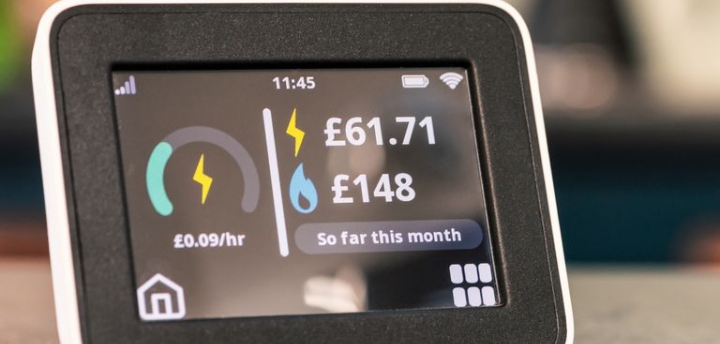
Use smart meters and thermostats to monitor and control usage.

🔹 Switch Tariffs Where Possible
Although most suppliers follow Ofgem’s cap, fixed-rate deals may be available. Always compare energy tariffs to check if savings are possible.
🔹 Access Support Schemes
Check eligibility for schemes such as:
Warm Home Discount (£150)
Winter Fuel Payment (for pensioners)
Local council energy grants

🔹 Cut Back on Phantom Energy Use
Unplug unused devices, switch off appliances rather than leaving them on standby, and choose energy-efficient products.
What to Expect After October
This cap will last for three months, after which Ofgem will review it again based on wholesale market conditions. Analysts suggest that while dramatic spikes are less likely than in previous years, energy prices are unlikely to fall significantly in the near term.
The UK’s ongoing transition to renewable energy and grid modernisation may eventually stabilise costs, but households should prepare for higher-than-average bills for the foreseeable future.—
Read more: Best Loans for People with Bad Credit UK – Top Options in 2025

FAQs
Q1. How much will the average UK household pay from October 2025?
A typical household will pay around £1,755 annually, up £35 compared to the current cap.
Q2. What is the Warm Home Discount?
It’s a £150 bill reduction given automatically to households on means-tested benefits during the winter months.
Q3. Will energy bills keep rising after October?
The price cap is reviewed every three months, so future changes depend on wholesale energy markets and government policies.
Q4. Can switching providers lower my bill?
Sometimes. While most follow the cap, some suppliers may offer fixed tariffs worth exploring.
Q5. Why are standing charges going up?
Standing charges are rising to cover network balancing costs and fund government support schemes like the Warm Home Discount.